
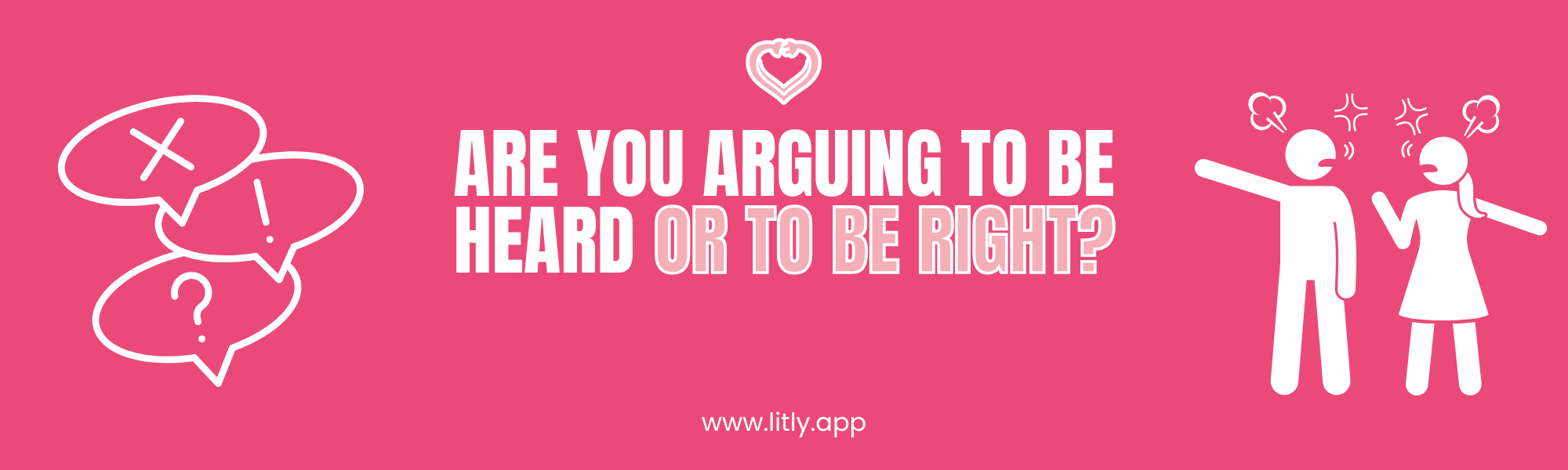
Exploring the Real Difference Between Connection and Control in Conflict
Arguments happen in every relationship. But what separates a healthy disagreement from a damaging one often comes down to intention — are you trying to understand, or are you trying to win?
It’s a subtle distinction, but an important one. Many of us think we’re standing up for ourselves or making a point, when in reality, we may be slipping into a power struggle. And when that happens, communication breaks down, emotions rise, and the relationship takes a hit — even if someone “wins” the argument.
So let’s dig into what’s really happening when we fight, and how to tell whether you’re seeking connection or control.
The Need to Be Heard vs. the Need to Be Right
At the core of most arguments are two basic human needs: to feel seen and to feel safe. When we don’t feel heard — whether it’s emotionally, mentally, or physically — it can trigger frustration or defensiveness. But when the focus shifts from “help me feel understood” to “let me prove I’m right,” we start arguing at each other instead of with each other.
That’s when an opportunity for connection becomes a contest.
Signs You’re Arguing to Be Right:
- You interrupt or stop listening as soon as you disagree
- You’re more focused on your next point than understanding theirs
- You repeat the same argument, hoping they’ll finally “get it”
- Winning feels more satisfying than resolving the issue
- You feel frustrated when your partner isn’t convinced by your logic
This often stems from a place of insecurity or the fear of not being validated. It’s human — but it’s also a cycle that can chip away at trust and emotional intimacy.
What Arguing to Be Heard Looks Like Instead:
- You ask questions to understand, not just to respond
- You acknowledge your partner’s feelings, even if you disagree with their viewpoint
- You’re willing to pause or de-escalate if the conversation is getting too heated
- You care more about resolution than being “right”
- You aim to leave the conversation with both of you feeling understood
This is the difference between defensiveness and curiosity — between combat and connection.
So, How Do You Shift the Dynamic?
- Start With Intentional Language: Use phrases like “Help me understand…” or “I hear you, and I feel…” to shift the tone.
- Stay Aware of Your Triggers: Notice when your need to be right is taking over, and gently course-correct.
- Create Emotional Safety: Make it safe for both of you to express without judgment or interruption.
- Take a Break If Needed: Sometimes space creates clarity — it’s okay to pause and return when you’re calmer.
- Ask: What Do We Both Need Right Now? Reframe the conflict as a shared challenge, not a competition.
Final Thought
Healthy conflict isn’t about winning. It’s about learning how to better love each other — even in disagreement. When the goal shifts from “being right” to “being understood,” relationships begin to thrive in deeper, more meaningful ways.
Next time you find yourself in a heated moment, ask:
Am I fighting for connection — or control?
Your answer might just change the outcome.
Leave a Reply